Showing posts with label cemetery. Show all posts

Monday, 25 April 2016

Remembering the ANZACs

 ANZAC Day is one of those all important commemorations that appears on the annual calendar. Prior to ANZAC Day this year, they were going on about the amount of Australians who take part. As one person said, just because people aren't at services doesn't mean they don't take part in ANZAC Day and that many people probably do commemorate in their own way.

This year I yet again missed Dawn Service. This time I did set an alarm but it was not very nice weather out so I opted to go back to sleep instead. Instead I decided to commemorate the day in my own way.

(ANZAC Day last year)

Getting up so late I thought there was nothing wrong with eating ANZAC muffins for breakfast. Not exactly a Gunfire breakfast but tasty all the same.


Usually on ANZAC Day, before or after dawn service a Gunfire breakfast is something to take part in. Often it is a big breakfast of bacon, eggs and all the other bits and pieces. When I still lived down south we joined in after the dawn service and it was put on by the RSL at the pub. The Gunfire part is actually black coffee with rum in it. I believe the history of it is that it was given a dutch courage to soldiers in the morning before a battle.


This afternoon, as my way of commemorating, I decided to head to the monument at the cemetery. I had never been there and what I didn't realise is that there is actually a War Cemetery within the cemetery.


It was peaceful walking there among the old graves and the Cairns War Cemetery itself was a great place for reflection.


I looked at other old grave sites on my wander back to the car. I spotted a few of the other service burials around the cemetery.

I then headed down to the Cairns Esplanade to the Cenotaph. It is across the road from the RSL (Returned Services League). They were certainly busy there.


It was interesting seeing pretty much everyone who walked past stop to look, read, discuss and show their respect. 


Where the Cairns War Cemetery is a resting place for those who served in WWII the Cenotaph list the names of those who served in WWI.


They shall grow not old, as we that are left grow old:
Age shall not weary them, nor the years condemn
At the going down of the sun and in the morning
We will remember them.
Lest We Forget

Laurence Binyon


To me, this reflecting and being thankful for what those have done in the past brings peace. The feelings you have when attending, especially dawn service are indescribable. Whether I go to an ANZAC Service or not I still think on it and commemorate it, even if it is only in my thoughts.

I Must Confess

SEASONS  - you can do your own thing. Or follow my variant.


Grab button for one mother hen

My Memory Art


Thursday, 18 July 2013

Mount Mulligan

The final stop on our little weekend adventure was Mount Mulligan.
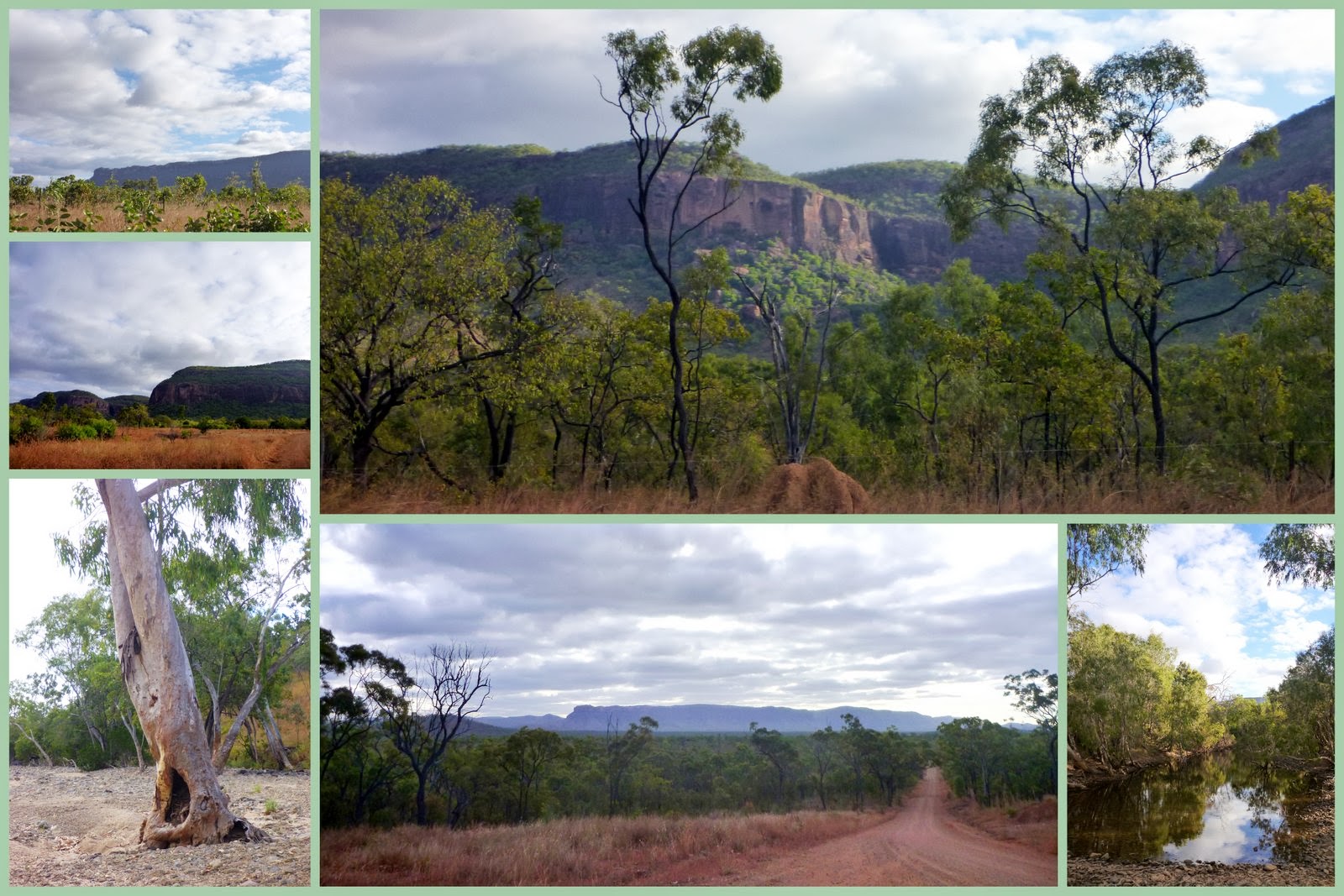
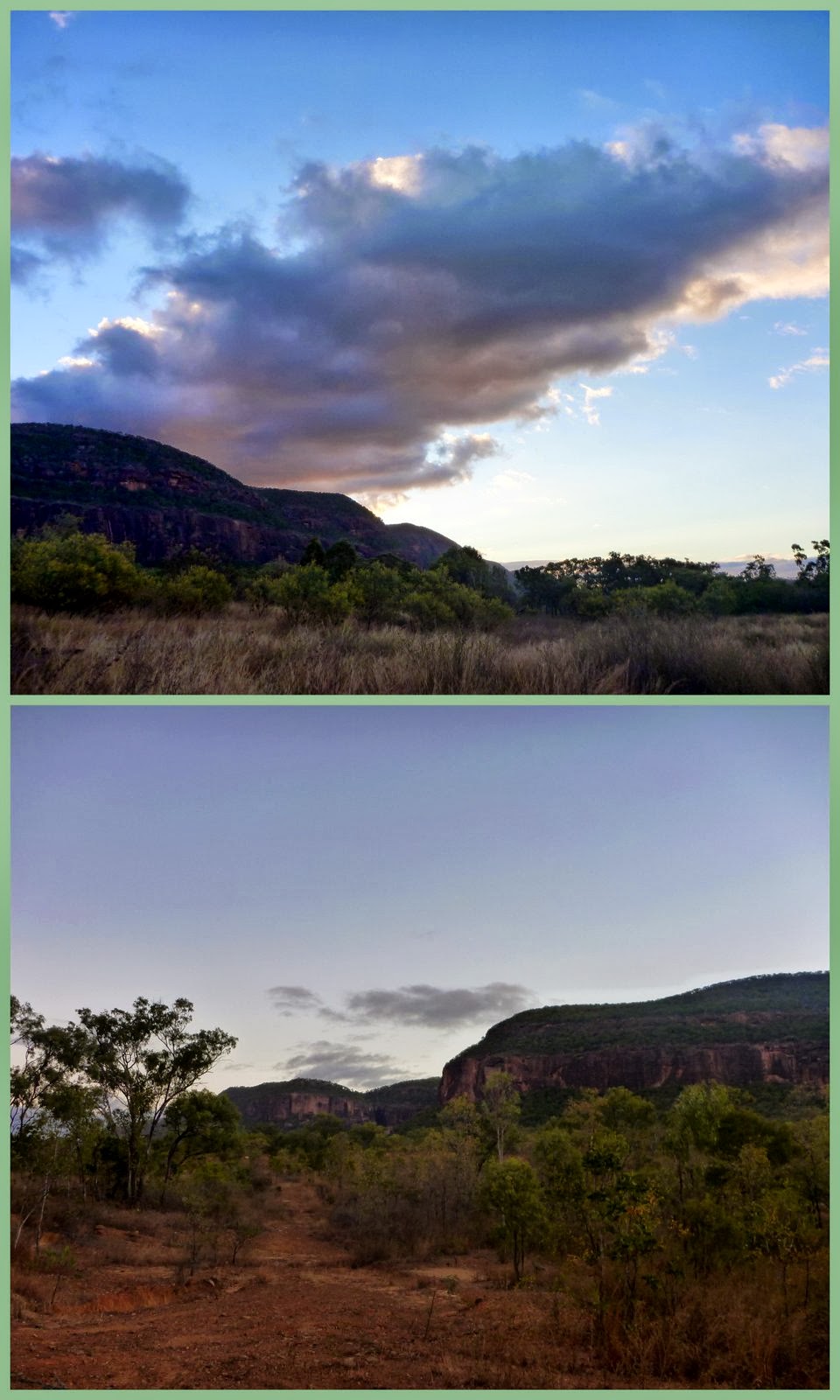
From a distance the mountain dominates the horizon but up close it dominates the landscape, drawing attention and making you feel, for want of a better word, small.
It is 18km long and rises 400m above the surrounding landscape making it around 10x the size of Uluru although it is nowhere near as well known.


Mount Mulligan is located on Mount Mulligan Station a 28 000 hectare working cattle station inland from Cairns that welcomes visitors. There a few things that make Mount Mulligan a notable location. Firstly it is the oldest dated site in Queensland for Aboriginal habitation. Secondly it is part of the Aboriginal Dreamtime Stories apparently being the home of the Rainbow Serpent. With its mammoth size I can see the connection. Lastly, and the reason we visited, it used to be home to a coal mine and town.

Coal was discovered within Mount Mulligan in 1907. In 1911 the Chillagoe Company started developmental works for the Mount Mulligan site with a railway being completed in 1914. The mine finally started full scale production in 1915. By 1921 the mine was producing 20 000 tonnes of coal per year and the surrounding town was home to around 300 people.
 
Our Mount Mulligan 'date afternoon' included going to the pub, the picture theatre and a cafe.

1921 was a tragic year in the history of Mount Mulligan Coal Mine and the mining history of Australia. On the 18th of September 1921 at 9:25am there was an explosion within the mine that killed all 75 miners underground at the time. It devastated the town killing approximately 1/4 of the entire population of the area or 1 out of 3 adults or 1 out of every 2 men. 40 women were left widows and 83 children were left fatherless. It is considered one of the most horrific mine disasters in Australia and the greatest land disaster in Queensland due to its impact on the community. For 5 days after the explosion a search and rescue took place recovering 74 bodies. When the mine was reopened 4 months later the remaining missing body was discovered. 
We found the ventilation shaft and mine entrance among the rocks at the base of Mount Mulligan.


After years of hardship and lack of profit the mine was closed in 1957 and the surrounding town was abandoned by 1958. It turns out that there was another explosion not long before that which is one of the many reasons along with the development of hydro power that the mine closed. All that is left now are the remains of some buildings and some recently erected signs giving street names and a way to identify the location of certain buildings. You can also see a ventilation shaft and view part of the main mine entrance. The main entrance was harder to find but you could smell it before you saw it. Oh boy did it pong, strong with the smell of some type of gas and the heat radiating from the opening was surprising.
I think Mr Sparky's fav finds were the electrical shop and power station well that is other than the mine itself.

It is hard to imagine a thriving town in this rocky, hard area covered in hardy wattle trees. If it wasn't for the chimney, house stumps, bricks, remains of the power station and water works, the gutted bathroom facilities and the coal dust covering the tracks you wouldn't believe it had even existed.
I know people moved to Mount Mulligan for the mine but what I can't see is why no one stayed (well I can because it was isolated and there was no work). It is such a beautiful area. I wanted to move right in.


Until the explosion in 1921 Mount Mulligan didn't have need for a cemetery so land had to be chosen and numerous graves dug. The majority of graves visible within the cemetery hold the date 1921 with some families losing multiple members. It really touched the heart seeing the names and loss.
Again nestled among the graves of adults mainly killed in mining accidents were the graves of young children and babies who barely had a grasp at life and whose graves seemed to be fenced with what may have been their sleeping place, their cot.


Today Mount Mulligan Station has many camping spots easily accessible from the road as well as a main camping area along the edge of a dam. Our plan was to camp overnight but unfortunately the 'Bull Catcher' had other ideas and started up a persistent rattling, clunking noise. After searching in the dark it was decided to be nothing too major but also decided that heading back to Cairns was the safer option in case the car decided to really chuck a sickie. Good news is that in the light of day it was nothing major and easily fixed but will need more permanent repairs at a later date.
I hope to go back again and explore some more as well as take a tonne more photos ... I think my poor point and shoot has done its dash.
Hopefully our next camping adventure is a camping adventure, although I did really enjoy our day in the bush.


Posted by Picasa

 There are plenty of legends to do with Mount Mulligan and its mining disaster so if you are interested have a read here.
There is more on Mount Mulligan Station here.
There is more on Mount Mulligan Coal Mine here (some information is different to what I have posted, mine is from a sign at the site).